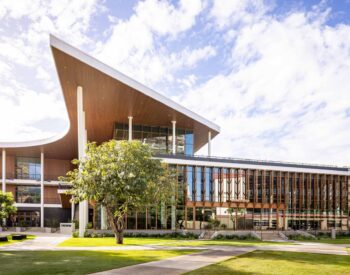
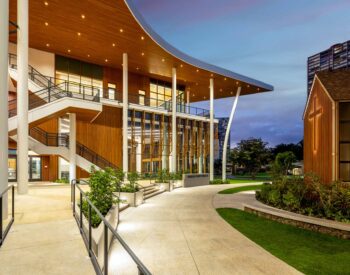
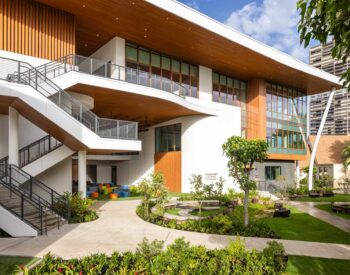
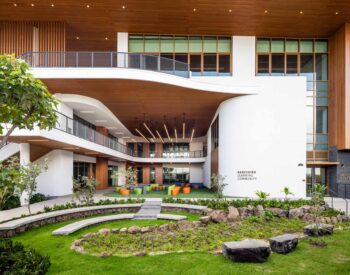
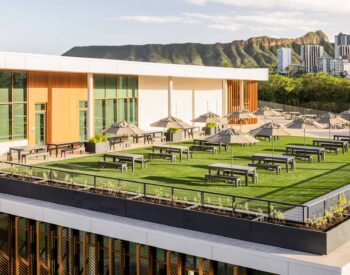
Iolani School’s new 81,000-SF student center is a dynamic campus hub featuring a two-story dining hall, wellness center, classrooms, rooftop event spaces, and a tea house for mindfulness—all designed to inspire community, learning, and sustainability. Along with other sustainability features, the roof structure is designed to support 459 grid-tied PV panels designed with a 275kW capacity to supply more than 25% of the building’s energy requirements.
The three-story structure consists of a mixed structural system, optimizing structural materials with project requirements. Most of the structure is comprised of a reinforced concrete frame supported on piles. Typical structured floors utilize post-tensioned concrete slabs to reduce the embodied carbon of the project. At the large exterior gathering space on the 3rd floor, post-tensioned beams were used to facilitate long spans to create an open and column-free two-story space for the ground floor dining hall. The roof is framed in structural steel to achieve its architecturally expressive shape that features large overhangs for shading and unbraced 50-foot-tall exterior columns beyond the building footprint to support soaring architectural cantilevers. The steel framing is highlighted with two unique, curved HSS round columns custom detailed by the architect to mimic the look of palm trees swaying in the wind.
Due to its location within an area of both flood and potential tsunami inundation and its use as a gathering space for students, the design included Risk Category III requirements including tsunami resistant construction. The lateral load resisting system and structural framing were designed for elevated wind and seismic demands in addition to potential hydrodynamic forces of a tsunami event, including wave passage through the building’s ground floor. This included more robustly constructed columns and walls to accommodate potential impact forces from tsunami-driven debris. Those potential impact forces were also considered in the design of the exterior HSS columns supporting the architectural roof structure. To enhance their stiffness and strength, the columns were filled with cementitious grout and, where architecturally feasible, supplemented with bracing at the 3rd floor.
In addition to the primary structure, BASE also assisted in the design of the facility’s chiller plant and school’s baseball backstop.